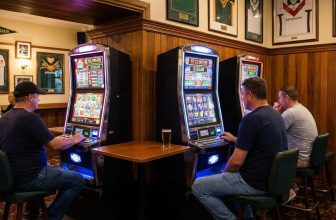

Australians love a punt. It’s just a fact. Around 80% of adults here have a go at some form of gambling each year, which makes us one of the keenest gambling nations on the planet. Walk into any pub and you’ll find pokies. Open your phone and you’ll see a dozen sports betting apps. Gambling isn’t just popular here—it’s woven into the culture itself.
But here’s where it gets messy: the legal side of things is a minefield. With so many options popping up online, users often stumble upon sites like pokies.net11 and similar domains promising massive bonuses, thousands of games, and instant access to all your favourite casino entertainment. Sounds great, right? Well, not all of these platforms are playing by Australian rules. In fact, many aren’t playing by any rules at all. Some operate in grey zones. Others are straight-up scams waiting to take your money and run.

So what’s actually legal? What’s banned? And how do you tell the difference between a dodgy operation and a legitimate casino that just happens to be based overseas? Those are the questions we’re answering here. Because if you’re going to gamble online in Australia, you need to know what you’re getting into. The risks are real, but so are the protections—if you know where to look.
The Legal Framework: Interactive Gambling Act 2001 (IGA)
Let’s start with the law. The Interactive Gambling Act 2001—everyone calls it the IGA—is the backbone of online gambling regulation in Australia. It was passed over 20 years ago when online casinos were still relatively new. The government wanted to tackle problem gambling, protect kids, and stop money laundering before the internet made everything harder to control.
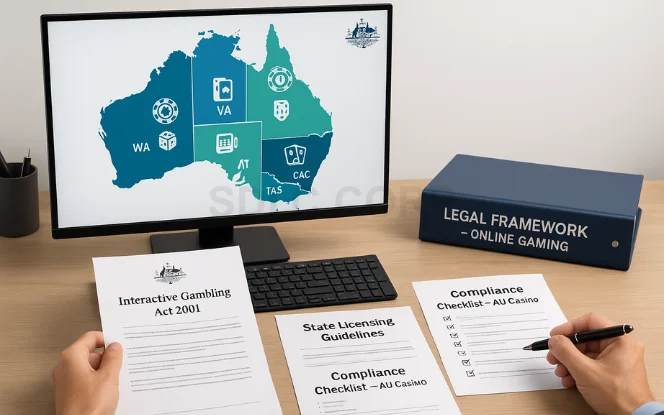
Here’s the crucial bit: the IGA targets operators, not players. That means if you’re sitting at home playing online blackjack on some offshore site, you’re not breaking the law. The company offering you that blackjack game? They’re the ones in hot water. This distinction matters more than you’d think.
The Australian Communications and Media Authority—ACMA for short—is the enforcement agency. They investigate complaints, hand out warnings, and can fine operators who breach the rules. ACMA also has the power to tell internet service providers to block illegal gambling websites. Does it work? Sort of. Players get around blocks pretty easily using VPNs or mirror sites, but ACMA keeps trying. The Act got beefed up in 2017 with tougher penalties, though enforcement against international operators remains patchy at best.
What does the IGA actually say? The table below breaks it down:
IGA Provisions – Allowed vs. Prohibited
| Allowed by IGA | Prohibited by IGA |
|---|---|
| Sports betting (pre-match and live) through licensed Australian operators | Online casino games (pokies, blackjack, roulette, baccarat) provided by Australian-based operators |
| Horse racing and greyhound wagering | Live dealer casino games offered to Australian residents |
| Lottery products and keno | In-play sports betting via online platforms (restricted to phone betting only) |
| Fantasy sports contests | Any interactive gambling service not explicitly authorized |
The law tries to balance a few competing interests: keeping state gambling revenue flowing, protecting consumers from dodgy operators, reducing problem gambling rates, and acknowledging that offshore casinos can reach Australians no matter what the law says. It’s a compromise that satisfies almost nobody. Critics say it’s too restrictive in some areas and completely ineffective in others.
What is Legally Allowed in Australia?
Despite what you might have heard, Australia hasn’t banned all online gambling. Far from it. There are several types of wagering that are completely legal and operate under solid regulatory frameworks. Knowing what’s legitimate helps you make smarter choices about where to put your money.
Fully Legal Online Gambling Activities in Australia:
- Sports Betting: Licensed Australian bookies offer comprehensive sports wagering on everything from AFL to international football. Pre-match betting is easy to access. Live in-play betting has to happen over the phone, not through apps or websites—one of those quirky legal distinctions the IGA created. Big names like Sportsbet, Ladbrokes, and TAB all operate under state licenses with proper player protection and links to self-exclusion registers.
- Horse and Greyhound Racing: This is Australia’s oldest form of legal gambling, and it’s gone fully digital. You can bet on races across Australia and around the world. Everything from simple win bets to complicated exotics like quadrellas and trifectas.
- Lotteries and Keno: State lottery operators let you buy tickets online for Powerball, Oz Lotto, Saturday Lotto, and more. Keno technically looks like a casino game, but it’s classified as a lottery product under Australian law, which is why it gets a pass.
- Fantasy Sports: Daily fantasy sports platforms are legal. You build virtual teams based on real athlete performance and compete for prizes. The “skill element” in team selection apparently distinguishes this from straight-up gambling in the eyes of the law.
Notice what’s missing? Online casino games. Specifically, pokies and table games like blackjack, roulette, and baccarat. You can play these in land-based venues all day long. Walk into any RSL or casino and fill your boots. But Australian-licensed operators cannot offer them online. Not allowed. The reasoning? Regulators worry about the addictive potential of continuous-play gambling when it’s available 24/7 in your bedroom with no social oversight.
Live dealer games fall under the same ban. Even though they use real dealers streaming in real-time—which seems pretty close to a physical casino experience—they’re still prohibited for Australian operators to provide. The law doesn’t care about the technical details. If it’s a casino game online, it’s banned.
The “Grey” Market and Offshore Casinos
Here’s where things get interesting. Just because Australian operators can’t offer online pokies doesn’t mean Australians have stopped playing them. Not even close. The demand just shifted to offshore operators who continue servicing Australian customers despite what the IGA says. These are international gambling sites licensed in places like Curaçao, Malta, Gibraltar, or Kahnawake. They accept Australian players. They process transactions in Aussie dollars or crypto. And they operate in a legal grey zone.

These operators are breaking Australian law by offering prohibited services. But here’s the thing: individual Australians face zero legal consequences for using them. It’s not illegal to play. It’s illegal to provide. That distinction has created a thriving parallel market.
Why do Australians keep using these sites? Several reasons. First, the bonuses are way better—welcome packages worth thousands of dollars, free spins, ongoing loyalty rewards. Second, many accept cryptocurrency deposits, which gives you anonymity and bypasses banking restrictions. Third, the game variety is massive. We’re talking thousands of pokies and table games, far more than any land-based venue. Fourth, the return-to-player percentages are often higher than Australian pokies, which can have RTPs as low as 85%.
Accessing these platforms has gotten trickier as ACMA blocks domains and Australian banks refuse transactions. This has spawned an ecosystem of mirror sites—alternative web addresses that get you to the same platform when the main domain gets blocked. Players often search for specific gateways such as the pokies net 114 login to access their account dashboard when their usual entry point goes dark. It’s a constant game of cat and mouse. Operators maintain dozens of domain variants, and they email or text existing customers with new addresses whenever blocks happen.
The grey market also includes a whole network of affiliate websites, review platforms, and promotional channels that point Australian players toward offshore operators. These middlemen usually operate from international jurisdictions, avoiding Australian oversight while earning commissions for player referrals. It adds more layers of opacity to an already murky situation, making it harder for regular punters to sort helpful information from paid marketing.
How to Distinguish a Legal Operator from a Scam
Right, so you’re thinking about playing at an offshore casino. How do you avoid getting ripped off? The online gambling world ranges from highly reputable international operators to complete frauds designed solely to steal your deposit. Understanding the difference could save you serious money and headaches.
Let’s be clear: offshore casinos in the grey market might not be “legal” under Australian law, but many are legitimate businesses operating under valid international licenses. That’s completely different from scam sites that have no license, no accountability, and no intention of ever paying you a cent.
Licensing is your first checkpoint. Legitimate offshore operators hold gambling licenses from recognized jurisdictions that impose standards, conduct audits, and require dispute resolution processes. The Malta Gaming Authority is the gold standard—their licensing requirements are tough and consumer protections are strong. The UK Gambling Commission is similar, though UK-licensed operators have mostly pulled out of the Australian market under regulatory pressure. Curaçao eGaming licenses are less rigorous than MGA or UKGC, but they still indicate some level of oversight. No license at all? Walk away.
Technical security features matter too. Legitimate operators use 256-bit SSL encryption to protect your data, display their security certificates clearly, and get regular audits from independent testing agencies like eCOGRA, iTech Labs, or GLI. These certifications prove that game outcomes are genuinely random and stated RTP percentages are accurate. Scam sites either lack these verifications or display fake certification logos that don’t link anywhere legitimate.
Legitimate Casino vs. Scam Site Indicators
| Signs of a Legitimate Casino | Red Flags of a Scam |
|---|---|
| Valid gambling license from recognized jurisdiction (displayed with verification link) | No license information or fake license claims without verification |
| SSL encryption (https:// and padlock icon in browser) | Unsecured connection (http:// only) or security warnings |
| Transparent terms and conditions with clear wagering requirements | Hidden terms, impossibly high wagering requirements (100x+), or contradictory rules |
| Multiple established payment methods including credit cards and e-wallets | Only accepts cryptocurrency or untraceable payment methods |
| Responsive customer support (live chat, email, phone) with actual human responses | No customer support, automated responses only, or support that disappears after deposit |
| Reasonable withdrawal processing times (24-72 hours) with stated limits | Constant delays, repeated document requests, or refusal to process withdrawals |
| Established online presence with player reviews and history | Brand new site with no reviews or only suspicious positive reviews |
| Games from recognized providers (NetEnt, Microgaming, Evolution Gaming) | Unknown game providers or poorly functioning games |
Customer support quality deserves special attention. Test it before depositing anything substantial. Ask specific questions about withdrawal processes, wagering requirements, license verification. Genuine operators give you detailed, accurate responses. Scam sites give vague answers, get hostile when you ask questions, or go silent after you’ve deposited.
Banking policies reveal a lot about legitimacy. Reputable casinos accept established payment methods—major credit cards, trusted e-wallets like Skrill or Neteller, bank transfers, plus newer crypto options. They process withdrawals within stated timeframes and maintain clear policies about verification requirements. Scam operations? They create endless obstacles. Excessive documentation demands, undisclosed fees, or flat refusal to process payouts while blaming “technical issues” or “irregularities” in your play.
Risks of Using Illegal/Offshore Sites
Thousands of Australians use offshore gambling sites without problems. That’s true. But operating outside Australian regulatory frameworks creates risks you should understand before committing your money. These risks go beyond simple legality questions into practical consumer protection issues that can cost you serious cash.
Key Risks for Players Using Offshore/Unregulated Sites:
- Zero Consumer Protection: Australian consumer laws don’t cover offshore operators. If a dispute happens—withheld winnings, unfair terms, sudden account closure—you can’t appeal to Australian consumer protection agencies. Your only option is the operator’s licensing jurisdiction, which often means expensive international legal action.
- Non-Payment of Winnings: There are countless cases of offshore operators refusing to pay legitimate winnings. They invent technical violations, claim you breached terms, or just close your account after a big win. Without Australian legal backing, your recourse is limited to complaints with the licensing authority. That can take months and offers no guarantees.
- Data Security Vulnerabilities: Offshore sites may not follow Australian privacy standards. Your personal and financial information could be breached, sold to third parties, or misused. Some operators have been linked to data theft schemes or identity fraud.
- Banking Complications: Australian banks increasingly decline transactions to offshore gambling sites. They might freeze your account or block credit cards used for gambling. Plus, currency conversion fees and international transaction charges eat into your bankroll.
- Lack of Responsible Gambling Integration: Legal Australian operators integrate with BetStop, the national self-exclusion register. It lets problem gamblers ban themselves from all licensed operators at once. Offshore sites don’t participate. That undermines harm minimization and makes it harder for vulnerable players to protect themselves.
- Tax Complications: Gambling winnings are generally tax-free for recreational Australian players. But using offshore sites in complex or professional gambling arrangements may create ambiguous tax situations requiring professional advice.
- Potential for Rigged Games: Licensed offshore operators undergo game fairness audits. Unlicensed or poorly regulated sites? They might use manipulated software that makes winning virtually impossible. Without independent verification, you’re trusting the operator’s integrity completely.
The severity of these risks varies dramatically. A well-established casino with an MGA license presents minimal fraud risk, though consumer protection gaps remain. An unlicensed operation that appeared overnight? Extreme risk. It could be a complete scam. Research and due diligence become your only protective measures.
Payment Methods and Withdrawal Nuances
The payment situation for online gambling in Australia has become fragmented. Legal operators, offshore casinos, and financial institutions all have different priorities around convenience, compliance, and harm prevention. Understanding the strengths and limitations of various payment methods helps you make smarter decisions about funding your gambling while minimizing fees, delays, and security risks.
Credit cards remain the most common deposit method on offshore casino sites. Instant funding, familiar interface—what’s not to like? Well, Australian banks have increasingly blocked gambling transactions, particularly to international operators. Many credit card transactions now get automatically declined. Others might succeed but trigger account reviews or warnings. Mastercard has been particularly aggressive about blocking gambling. Visa processing shows more variability depending on your issuing bank.
E-wallets like Skrill, Neteller, and PayPal emerged as workarounds. They sit between your bank and the casino. You fund your e-wallet through standard banking, then transfer to gambling sites without those transactions appearing on bank statements as gambling-related. Extra benefits include faster withdrawals—often within 24 hours—and an additional layer of financial privacy. The downside? PayPal has mostly withdrawn from online gambling due to regulatory pressure. Skrill and Neteller charge fees for deposits, withdrawals, and currency conversions that can total 3-5% of your transaction amounts.
Cryptocurrency changed everything. Bitcoin, in particular, revolutionized offshore gambling payments by offering near-anonymous transactions that bypass traditional banking restrictions entirely. Crypto deposits process almost instantly. Withdrawals typically complete within hours rather than days. The decentralized nature makes transaction blocking virtually impossible. Bitcoin, Ethereum, Litecoin, and newer alternatives like Tether have become standard at many offshore casinos. What’s the catch? Price volatility—you might lose value between deposit and withdrawal. There’s also a technical learning curve for newcomers, and transactions are irreversible if you send to the wrong address.
Payment Method Comparison for Online Gambling
| Payment Method | Deposit Speed | Withdrawal Speed | Anonymity Level | Fees | Bank Restrictions |
|---|---|---|---|---|---|
| Credit/Debit Cards | Instant | 3-7 business days | Low | Usually none | High – often blocked |
| E-Wallets (Skrill, Neteller) | Instant | 24-48 hours | Medium | 2-5% transaction fees | Low – separate from banks |
| Bank Transfer | 1-3 business days | 3-7 business days | Low | Varies by bank | High for offshore sites |
| Cryptocurrency | 10-60 minutes | 1-24 hours | High | Network fees (variable) | None – decentralized |
| Prepaid Vouchers (Neosurf) | Instant | Not available | High | Purchase fee varies | None |
| POLi Payment | Instant | Not available | Low | Usually none | Medium – direct bank access |
Prepaid vouchers like Neosurf offer another route. You buy vouchers with cash at retail outlets, then deposit using the voucher code. This provides privacy—no banking trail—and spending control since you’re limited to the voucher amount. But vouchers typically only work for deposits. Withdrawals need alternative methods. They also often include service fees and may not be available for large deposits.
Withdrawal methods frequently don’t mirror deposit options, which creates frustration when you discover your preferred deposit method isn’t available for cashing out. Many offshore casinos require withdrawals through the same method as deposits—anti-money laundering compliance, they say. But if you deposited via credit card, they may convert your withdrawal to a bank transfer or e-wallet payment. Understanding these quirks before depositing helps avoid unpleasant surprises when accessing your winnings.
Processing times and limits vary dramatically between operators. Budget casinos might impose $2,000-$5,000 monthly withdrawal limits and take 5-7 business days to process requests. Premium operators offer limits of $10,000+ per transaction and process withdrawals within 24 hours. These differences should factor into platform selection, especially if you gamble with larger bankrolls. The verification process also introduces delays. First-time withdrawals typically require identity verification through passport or driver’s license scans, proof of address via utility bills, and sometimes payment method verification through bank statements or card photos. Complete this verification before requesting your first withdrawal to prevent delays when you want access to funds.
Conclusion
Wrapping things up: Australia’s online gambling situation is complicated. Laws designed to protect consumers have inadvertently created markets with reduced oversight. The central reality is straightforward, though. The Interactive Gambling Act prohibits Australian operators from offering online casino games, but it doesn’t criminalize individuals who play on offshore platforms. You won’t face legal consequences for your gambling choices. But you may face practical consequences from reduced consumer protections when using unregulated operators.
The smartest approach? Combine awareness with caution. If you choose to gamble online, prioritize platforms with legitimate international licenses from respected jurisdictions like Malta or the UK. Verify technical security measures. Test customer support responsiveness. Start with small deposits to evaluate withdrawal reliability before committing significant funds. Understand that even reputable offshore operators exist outside Australian consumer protection frameworks. That means disputes become exponentially more difficult to resolve than issues with domestic licensed bookmakers.
Legal options like sports betting, racing wagering, and lottery products provide gambling entertainment with robust regulatory oversight, guaranteed dispute resolution, and integration with responsible gambling tools like BetStop. These platforms may offer smaller bonuses and less game variety than offshore casinos. But they provide peace of mind that your funds are secure and your rights are protected under Australian law.
The bottom line is this: using offshore gambling sites involves accepting trade-offs between access to prohibited games and the security of regulated environments. Make that choice with full awareness of both benefits and risks. Never gamble with money you can’t afford to lose. Use responsible gambling tools regardless of where you play. Whether you choose the safety of legal Australian operators or venture into the grey market of offshore casinos, informed decision-making remains your best protection against financial loss and predatory practices in this complex and constantly evolving space.