
Walk into almost any RSL club on a weekday evening in suburban Sydney or Brisbane and you’ll usually notice the sound first — a steady electronic hum that sits under the clink of glasses and the chatter from the bistro. The gaming room doesn’t feel secretive or “underground.” It’s simply part of the venue: rows of machines along the walls, a few regulars who know exactly which seat they like, and staff moving through the space as routinely as they do behind the bar.
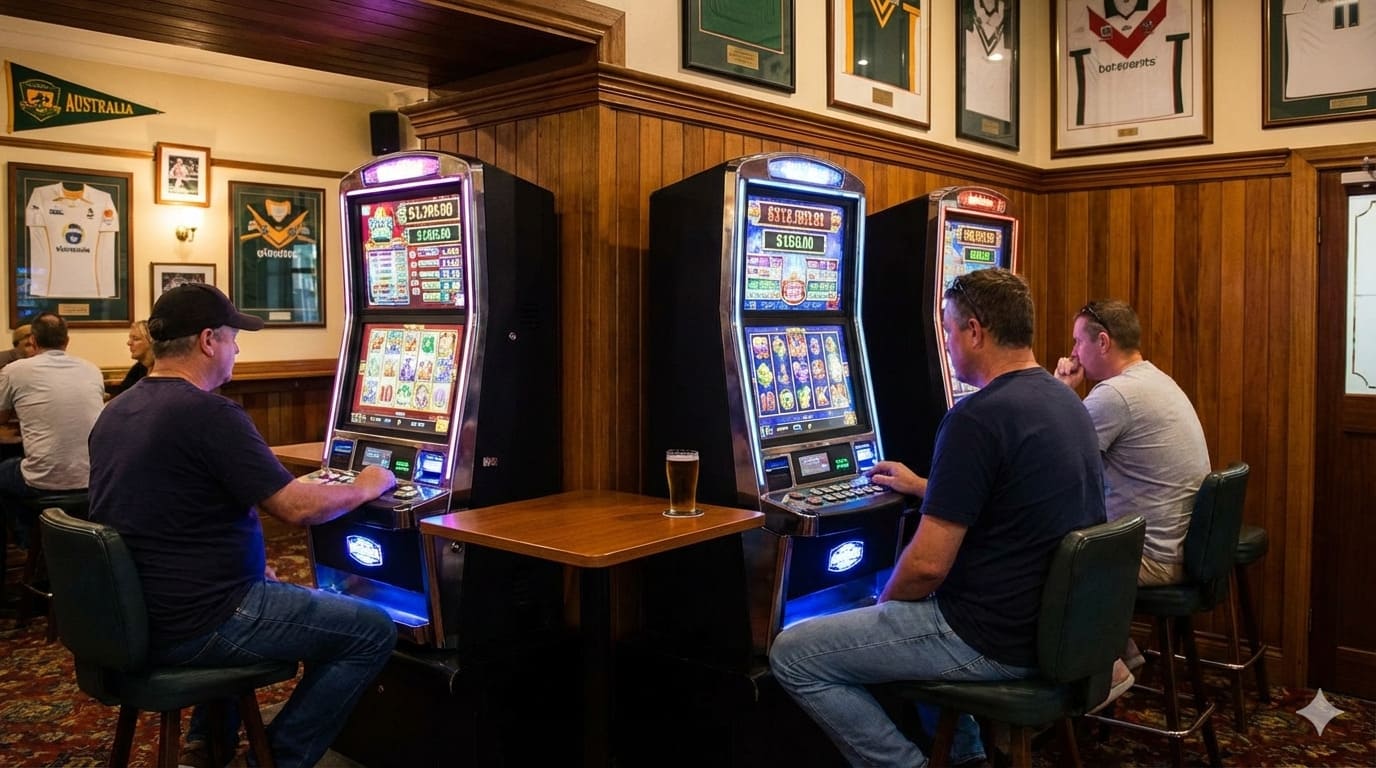
That normality is what surprises visitors most. In many countries, gambling machines are tightly confined to casinos. In Australia, they’ve long been embedded in everyday social venues — clubs, pubs, and community spaces that also host birthdays, sports awards nights, charity raffles, and cheap midweek meals. The pokies aren’t always treated as the main attraction, but they’re rarely treated as an outlier either. They’re “just there,” woven into the architecture of local leisure.
Australia’s relationship with poker machines is also unusually scaled. The country is frequently cited as having one of the highest concentrations of gaming machines in the world, and the debate around them has never really settled. For some people, pokies are a harmless flutter that sits alongside a counter meal and a beer. For others, they’re a public health problem hiding in plain sight — a product designed to hold attention and drain money quickly, located in places people visit when they’re tired, lonely, stressed, or bored.
In the last decade, the conversation expanded again as online entertainment reshaped habits. Traditional venues still dominate many communities, but digital options — including platforms people search for under terms like Jackpot Jill Australia — changed how some Australians think about “gaming” as a category. For younger demographics raised on smartphones, streaming, and frictionless payments, the idea of gambling as something that only happens inside a venue feels outdated. That shift complicates regulation, culture, and the everyday language people use to talk about risk and responsibility.
To understand pokies and casino culture here, you have to hold multiple truths at once: the history that put machines into clubs; the psychology that makes them so sticky; the state-by-state patchwork of rules; the financial incentives that locked venues and governments into a long dependency; and the human stories — ordinary people, not caricatures — who slide from “just a bit of fun” into something harder to control.
Where “Pokies” Came From
“Pokies” is distinctly Australian shorthand — a casual word that hints at how normal the machines became. Early mechanical gambling machines existed in Australia for much of the 20th century, but the bigger cultural shift arrived once clubs gained access to electronic gaming as a reliable revenue stream. RSLs, leagues clubs, bowling clubs, and similar venues weren’t only selling drinks; they were selling an affordable night out and a sense of belonging. Gaming revenue helped pay for renovations, subsidies, staffing, and community programs — and that created a powerful incentive to expand.
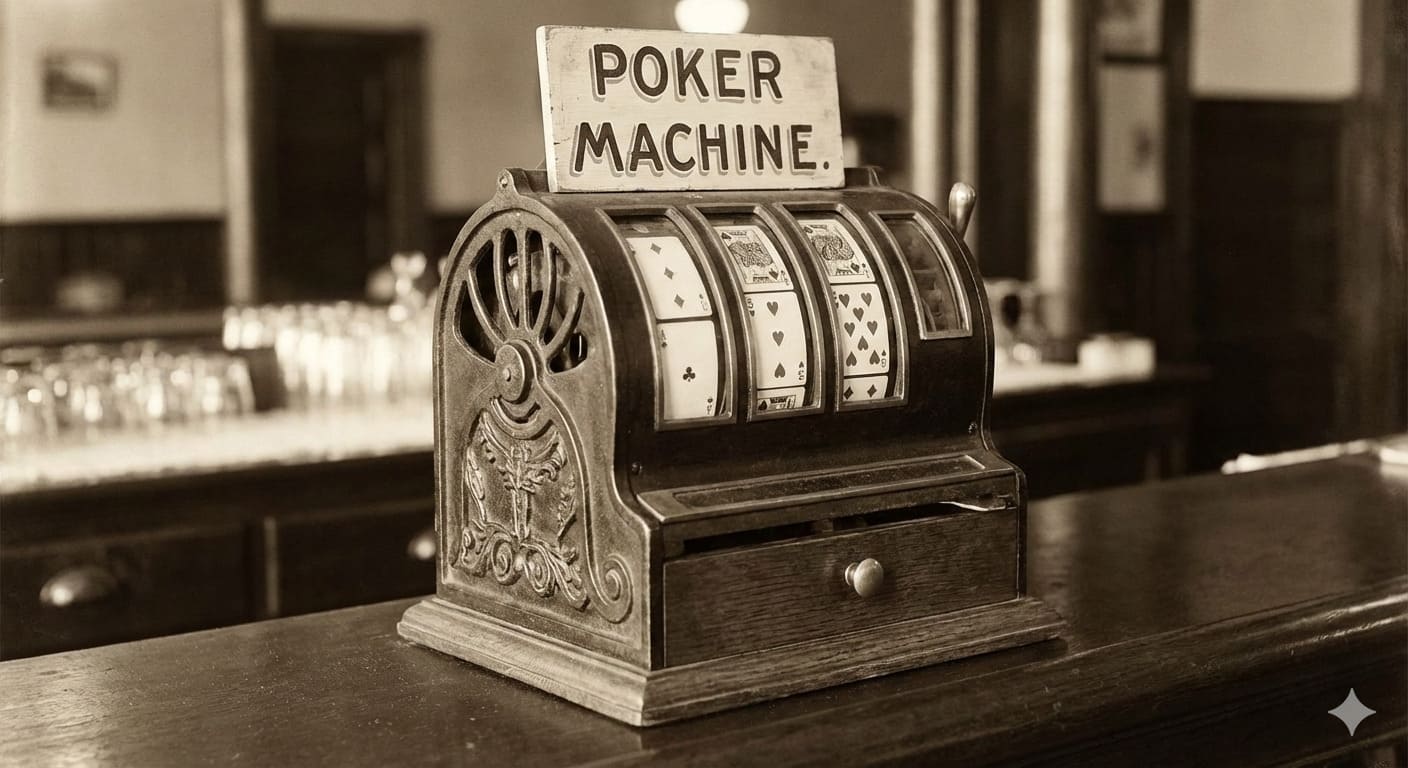
By the late 20th century, the machines evolved rapidly: from mechanical reels into electronic systems built around software, audio design, and animated features. The experience became faster, brighter, and more immersive. At the same time, state governments increasingly treated gambling tax as a stable pillar of revenue — a fact that shaped policy decisions even when the social costs were obvious.
The expansion wasn’t uniform. Western Australia famously kept pokies out of pubs and clubs, allowing them largely within its casino environment. New South Wales went the other direction: high venue density, a deeply established club culture, and years of political caution around sweeping reform. Other jurisdictions landed somewhere in between, building a patchwork system that still defines Australian gambling policy today.
Clubs, Pubs, and the Everyday Ritual
To outsiders, the ubiquity of pokies can feel confronting — not because gambling exists, but because it exists in places that also function as community living rooms. In many suburbs, the local club is where retirees meet for lunch, where families book function rooms, where locals watch footy, and where community groups raise funds. Pokies sit inside that ecosystem, often physically separated by a door but culturally intertwined with the venue’s identity.
That’s the social bargain at the heart of the issue. Clubs can point to real community contributions — sponsorships, facilities, low-cost meals, and jobs. Critics respond with an equally real counterpoint: gambling harm is not spread evenly. The heaviest losses tend to come from a smaller slice of players, and the burden falls disproportionately on disadvantaged communities. Both statements can be true at the same time, which is why the debate remains so charged.
Several forces pushed pokies into the “normal” category over decades:
- Clubs needed reliable income beyond food and membership fees to stay viable.
- State budgets became increasingly comfortable relying on gambling tax revenue.
- Venues marketed gaming as one amenity among many, not the main event.
- Loyalty programs and reward structures encouraged repeat visits.
- Machine design steadily improved at keeping people engaged longer than intended.
- High venue density made access effortless — a short drive, a familiar room, no questions asked.
- For many people, pokies offered a private, low-social-pressure way to pass time.
None of this requires a conspiracy theory. It’s a story of incentives — financial, political, and psychological — stacking up year after year until the machines became background infrastructure.
The Casino Side of the Story
When Australians talk about “the casino,” they usually mean the major destination venues in capital cities — big entertainment complexes with restaurants, events, hotels, bars, and multiple forms of gambling under one roof. The cultural feel is different to an RSL. Casinos trade in spectacle and occasion: higher stakes, a broader menu of games, a more tourist-facing identity, and a stronger association with nightlife.
That difference matters because the risks and behaviors can look different too. In clubs and pubs, harm often comes from accessibility and repetition — regular visits, long sessions, quiet losses that accumulate. In casinos, harm can be concentrated in high-stakes environments and high-intensity sessions, especially for people drawn to VIP rooms or table games. They’re not separate worlds — plenty of people move between them — but the environments nudge behavior in different ways.
| Aspect | Venue Pokies | Casino Gaming |
|---|---|---|
| Atmosphere | Casual, familiar, local routine | Occasion-based, aspirational, tourist-facing |
| Product Mix | Mostly gaming machines | Machines, table games, poker, venues and events |
| Typical Visit | Frequent, shorter “normal” visits | Less frequent, longer sessions for some visitors |
| Harm Profile | Accessibility and habit formation | High stakes, intensity, VIP exposure for some |
The Psychology of the Experience
Modern gaming machines are engineered. Every detail — sound, animation, pacing, reward timing — is tuned to keep attention. Wins are celebrated loudly even when they’re “losses disguised as wins.” Near-miss outcomes feel like you almost got there, even though each spin is independent. Fast cycles allow an extraordinary number of bets per hour, which helps create the trance-like focus researchers often describe as “the zone.”
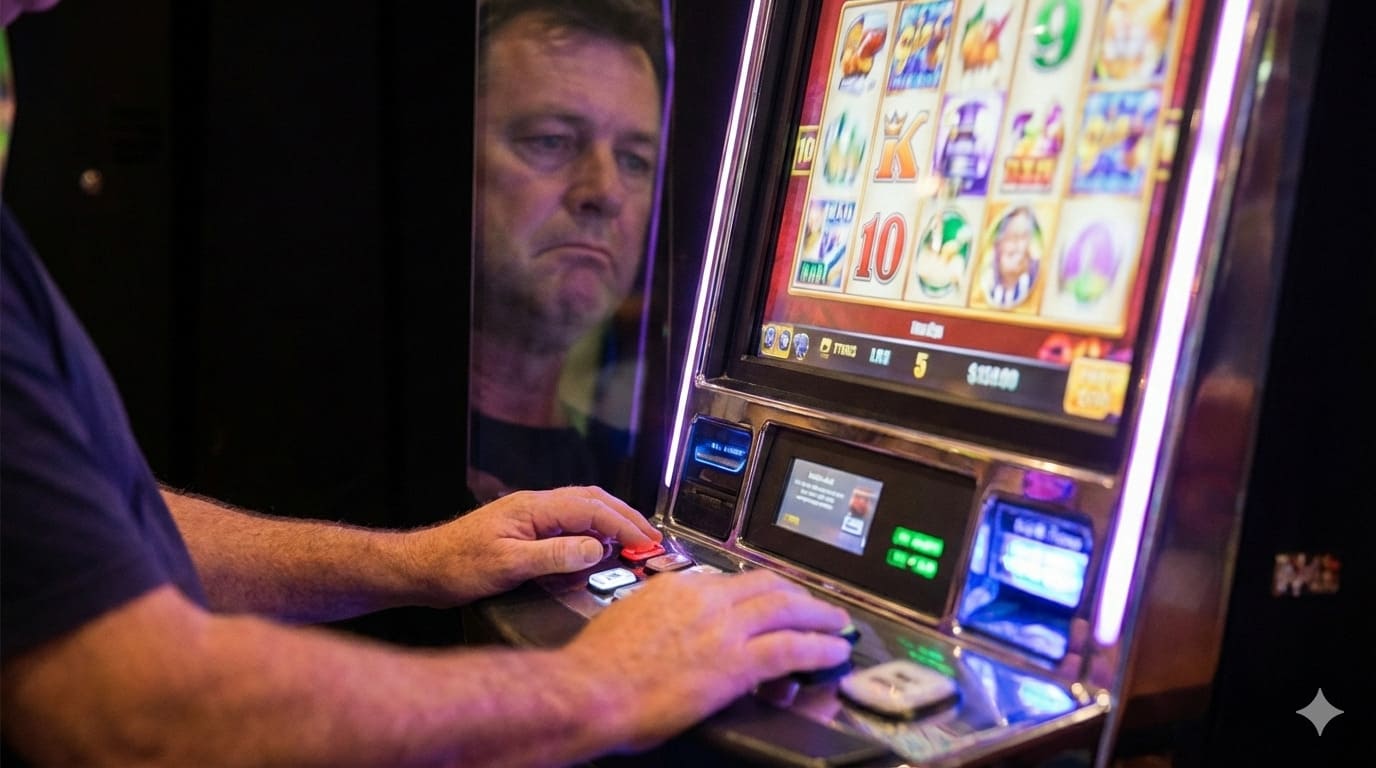
People don’t need to be naive to be pulled in. You can understand, intellectually, that the machine has a long-term edge and still find yourself pressing the button again. The “stickiness” often isn’t greed; it’s relief — a small pocket of time where nothing else matters. For some, that’s a harmless escape. For others, it’s exactly what makes the behavior spiral.
Consider a story you’ll hear variations of across the country: someone finishes a draining shift, stops at the club “just for a bit,” plays the same machine because it feels familiar, and loses track of time. The money isn’t the point at first. The point is quiet. The point is routine. Only later — after months, sometimes years — does the tally become real enough to feel frightening.
Regulation and Harm Minimisation
Australia doesn’t have one unified gambling rulebook. States and territories regulate their own systems, and protections vary widely — bet limits, venue hours, machine density rules, and harm-minimisation requirements. That unevenness is one reason reform debates keep resurfacing: a measure considered standard in one jurisdiction can be politically impossible in another.
Harm-minimisation tools exist, but effectiveness depends on how they’re implemented and enforced. Some measures are designed to change behavior (for example, limits that genuinely slow spending). Others function more like “visible responsibility” — signage, pamphlets, or staff training that looks reassuring but doesn’t always meaningfully reduce harm.
Support services like Gambling Help Online exist precisely because the entertainment model fails for a portion of users, sometimes catastrophically. Their presence is a quiet acknowledgement of the cost under the surface: debt, relationship breakdown, mental health strain, and shame that keeps people silent until things are already severe.
Common harm-minimisation measures you’ll see discussed or applied include:
- Visible clocks and clearer information screens in gaming areas
- Restrictions around ATM placement and access to cash near machines
- Self-exclusion programs (with varying ease of use and enforcement)
- Activity statements for loyalty members (useful, but only if people read them)
- Bet limit rules that differ by jurisdiction
- Venue shutdown hours (and debates over tightening them)
In recent years, some governments have moved toward stricter settings — including carded-play and precommitment approaches in parts of the country. The broader trend is clear: pressure is increasing to treat gambling harm less like a private failing and more like a public policy issue. :contentReference[oaicite:0]{index=0}
Money, Community, and Controversy
The economics are not a side note — they’re the engine of the entire debate. Clubs and industry groups emphasize community funding, employment, and the role venues play as social infrastructure. Critics argue that funding essential community services through gambling losses creates a dependency that is ethically messy and politically hard to unwind. And because losses are often concentrated among a smaller subset of players, the “funding model” can look, in effect, like a regressive tax.
This is why conversations about reform get stuck. Even people who dislike pokies often rely on the venues they help sustain: the cheap meal, the accessible function space, the local sponsorship. Meanwhile, governments face the obvious temptation to preserve a revenue stream while promising “responsible gambling” as a compromise. The result is a kind of permanent tension — reform pressure rising, incentives resisting, and incremental changes that rarely satisfy either side.
How Culture Changed With Digital Life
Smartphones didn’t replace venue pokies — but they did change expectations. Digital entertainment trained people to expect convenience, personalization, and instant access. That logic spilled into gambling. Online platforms introduced 24/7 availability, private play (less visible to friends or family), and payment flows that make spending feel less tangible than feeding notes into a machine.
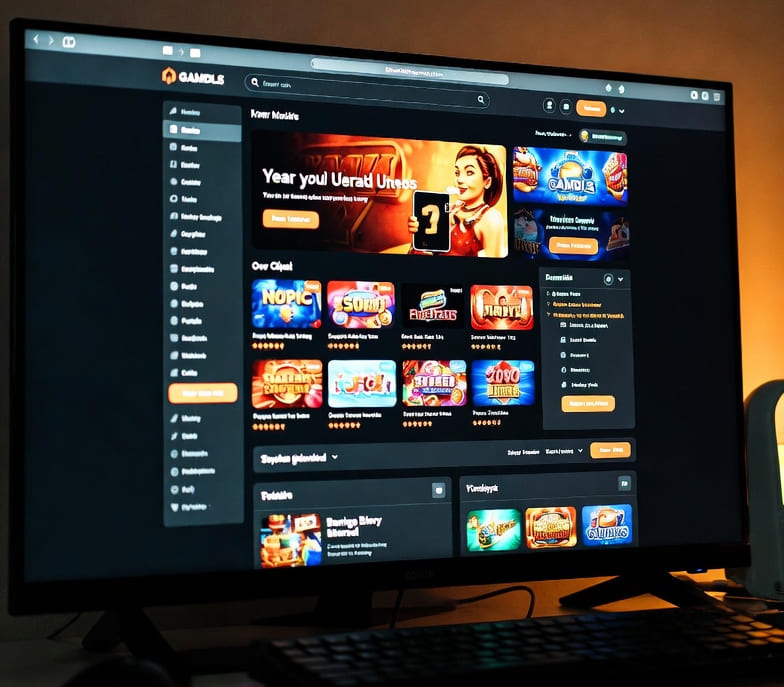
At the same time, online gambling raises enforcement and jurisdiction questions. Offshore operators can target Australians even when local rules discourage or restrict certain products. Advertising and sponsorship — especially around sport — became a cultural battleground of its own, with regulators and advocates pushing for tighter controls.
| Element | Then | Now |
|---|---|---|
| Access Pattern | Physical visit required | Playable anywhere via mobile |
| Social Context | Public, shared venues | More private and less observable |
| Spending Feel | Cash is tangible | Digital payments feel abstract |
| Stopping Points | Venue closing hours | Fewer natural breaks |
| Oversight | Local licensing and physical compliance | Harder cross-border enforcement |
How People Talk About It Today
Ask ten Australians about pokies and you’ll get ten slightly different answers. Some see them as ordinary entertainment and resent being lectured. Some have watched relatives spiral and want dramatic reform. Many hold contradictions: they enjoy the venue, dislike the machines, and feel uneasy about how tightly the two are linked.
The arguments repeat because the underlying values conflict:
- Personal choice versus public health framing
- Community funding versus harm concentration
- Incremental reform versus structural change
- Budget dependence versus moral discomfort
And over all of it sits a reality governments can’t easily ignore: once a society builds institutions around a revenue stream, walking away becomes politically expensive — even if everyone agrees the costs are real.
Visiting Australia: What to Expect
Visitors are often surprised by how “ordinary” pokies look in suburban life. You’ll see gaming rooms attached to venues that also serve families, retirees, sports fans, and community groups. Most places require ID for entry into gaming areas, and venues can refuse service to intoxicated patrons. The legal gambling age is 18 nationwide, although some venues may enforce stricter entry policies for certain spaces.
If you’re researching Australian gambling culture — or simply curious — it helps to see both sides of the environment. Physical venues offer a social context that online spaces don’t. Digital alternatives, including sites people find via searches like jackpot-jill.com, reflect how gambling has moved closer to the frictionless patterns of the wider internet. Either way, it’s worth approaching with clear eyes: gambling products are built to hold attention, and the risks are not hypothetical for a meaningful minority of users.
| Setting Type | Typical Atmosphere | What You’ll Notice |
|---|---|---|
| RSL / Community Club | Local, multigenerational, routine | Gaming room alongside bistro, bar, function spaces |
| Hotel / Pub | Social venue with separate gaming area | Gaming room, TAB, sports screens, late trading |
| Major Casino | Entertainment complex | Table games, shows, restaurants, higher-stakes zones |
| Regional Venue | Community hub in smaller towns | Often the main social venue, high familiarity |
Conclusion
Pokies occupy a uniquely Australian space: normalised enough to fade into the background, controversial enough to trigger constant political conflict, profitable enough to shape budgets, and harmful enough to break lives. They’re embedded in places that genuinely serve communities, which makes reform harder — not easier — because it challenges the funding model of venues people rely on for social connection.
The cultural story isn’t simple. There are real community benefits, and real concentrated harms. There are people who can enjoy a small flutter without trouble, and people for whom the machines function like a trap. There are governments promising better protections, and systems still built around incentives that reward volume and repetition. Australia’s pokies culture persists because those contradictions have never been resolved — only managed, argued over, and periodically tightened at the edges.
The question isn’t whether pokies are part of Australian culture — they clearly are — but whether the shape of that culture serves Australians well.